
Tomorrow the Sun Will Rise at the Phillips Collection
By Belle DeArmon
The Phillips Collection is a venerable Washington, DC art venue. Its latest exhibition asks visitors to be vulnerable – to new ideas and perspectives from local artists.
Tomorrow the Sun will Rise features the work of 48 artists from throughout the DMV – DC, Maryland and Virginia – spanning five themes touching contemporary life and issues: gazing, archiving, challenging, processing, and experimenting.
The title of the show is itself an exhortation from Chico Buarque, a Brazilian musician famous for singing the famous line “amanhã vai ser outro dia" (‘tomorrow will be another day’). Buarque created music that defied the country’s successive 1970’s and 1980’s-era dictatorships. Today, resistance to repressive regimes is again a central theme globally, as artists illuminate pressing issues and resist authoritarianism in America and around the world.
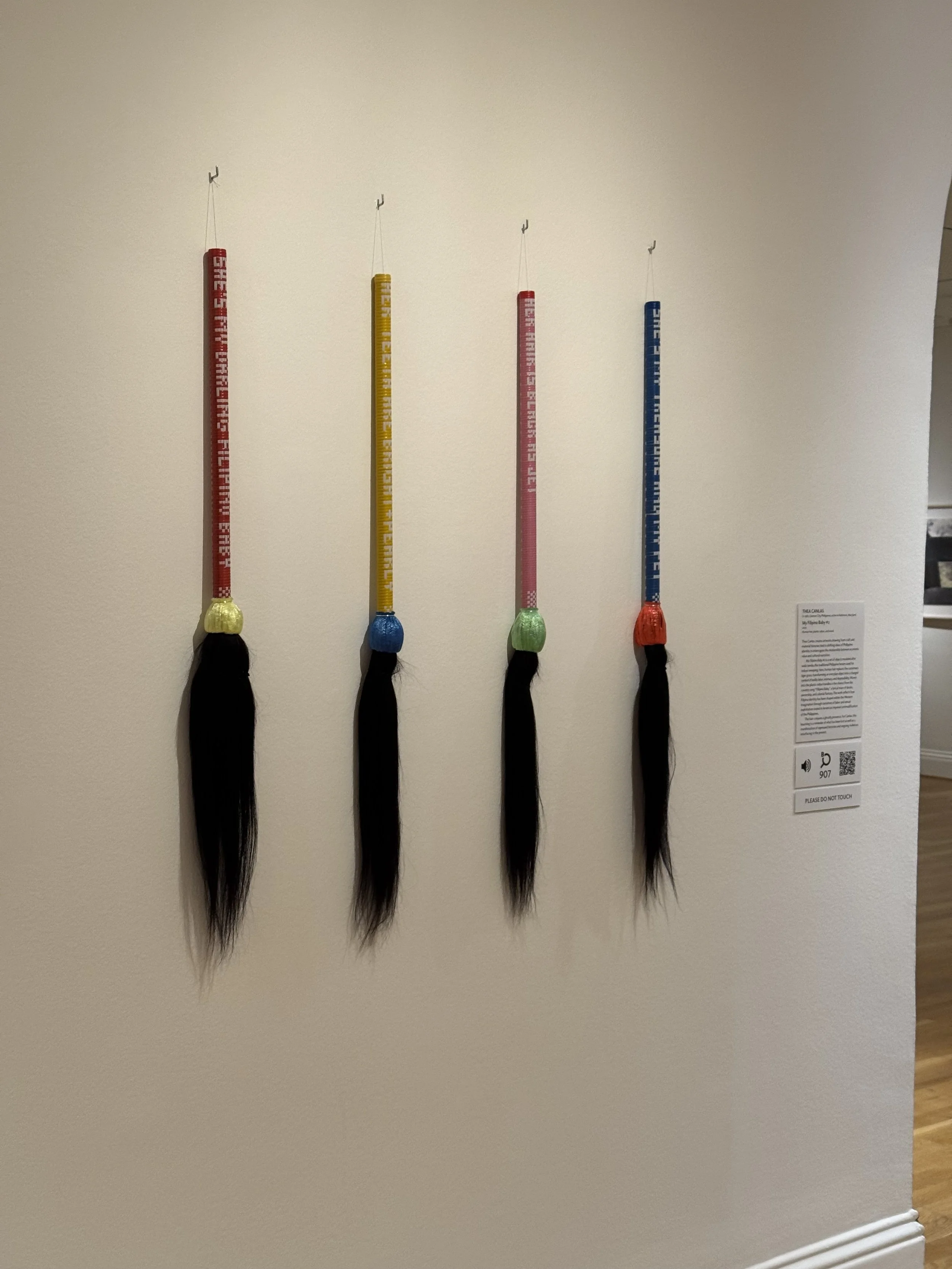
In the first room, my attention was drawn to four large brooms attached to the wall. The brooms were partly made of human hair, and the broom handles included lines from a country song. The piece is titled, after the song, “My Filipino Baby #2.” The artist, Baltimore-based Thea Canlas, who was born in Quezon City in the Philippines, hopes that viewers grapple with the ways that Filipina identity is entangled with western ideas about labor, sexual exploitation and racial capitalism, ideas embedded in the song they created the work in reference to. Canlas’ work directs a critical gaze to the enduring legacy of American imperialism in the Philippines and in American culture.
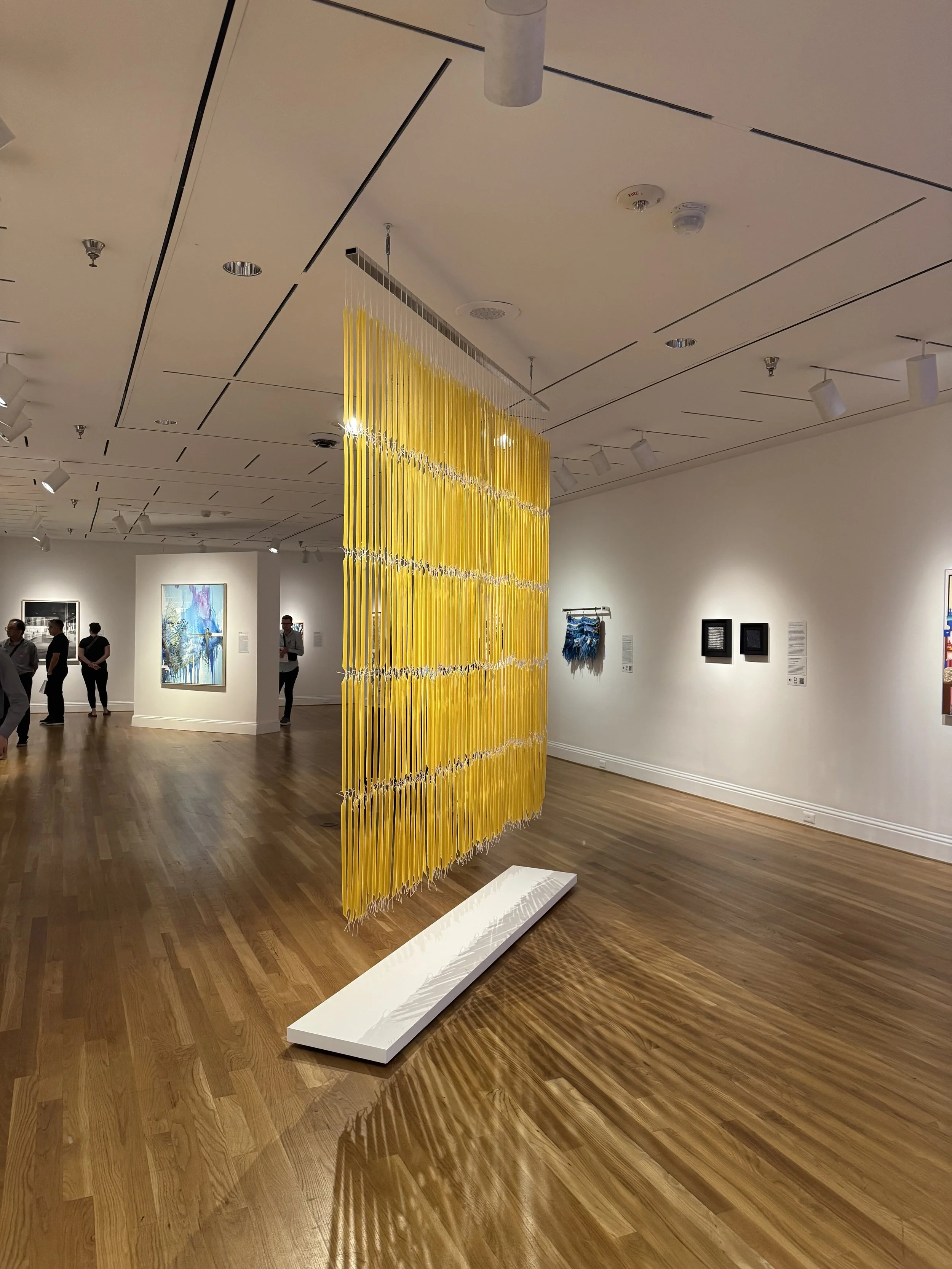
In the second room of the exhibition, I looked up to see beeswax candles suspended from the ceiling. “Linea XV,” by the Washington, DC-based artist Mary Early, is a large, ornate curtain that dramatizes how nature can easily morph into a feature of domestic space.
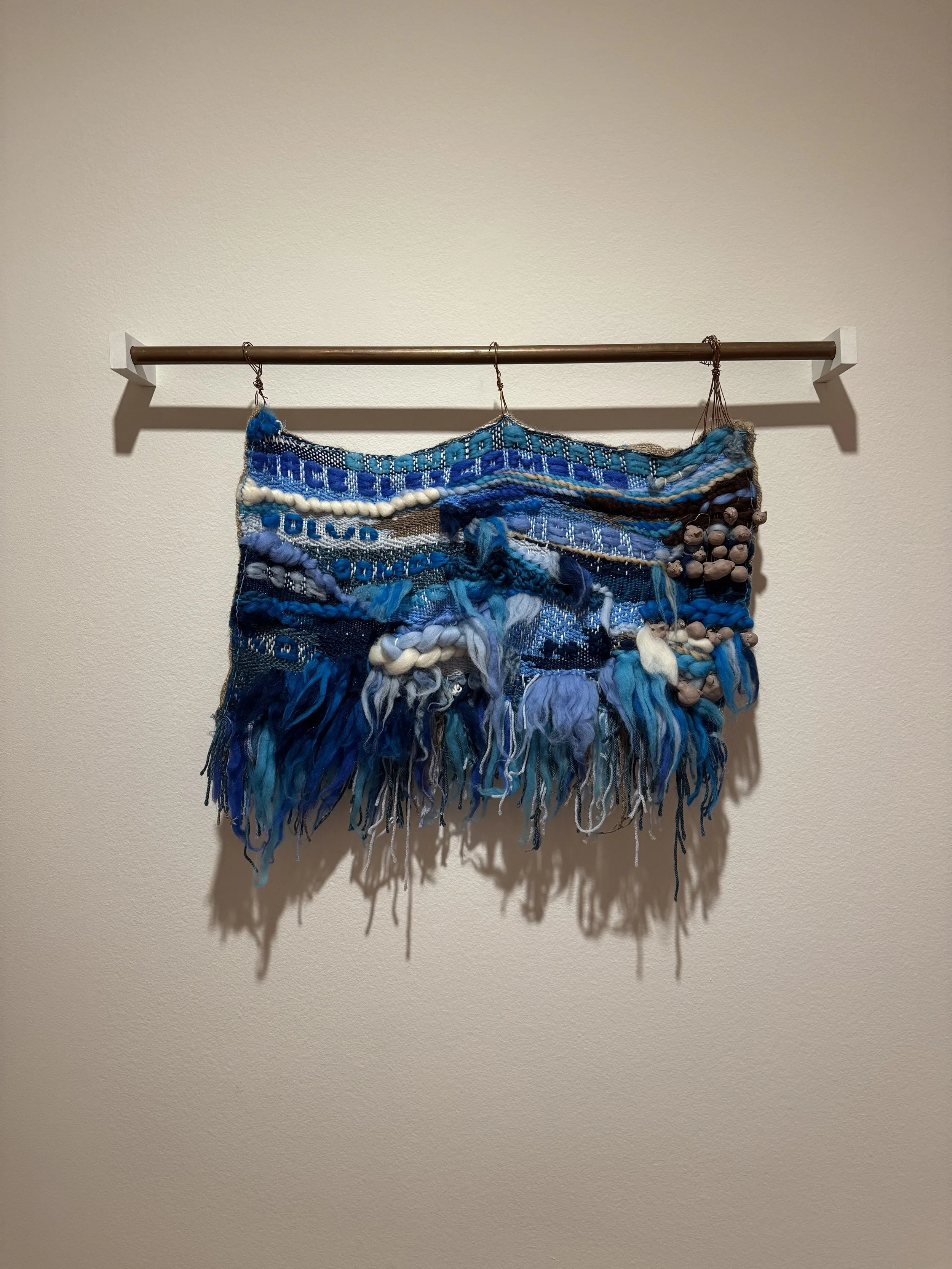
As a knitter and crocheter, I was happy the exhibit included some pieces of fiber art. A blue woven piece stood out. “Rewe Tapestry,” which the DC and LA-based artist Diego Borgsdorf made, was inspired by the experience of the Chilean diaspora in America during Pinochet’s dictatorship. Borgsdorf hand dyed and wove wool roving, sheep’s wool prior to it being turned into yarn, into a striking, multi-textured tapestry. A powerful expression of protest given Chile’s recent election of a Pinochet disciple as President.
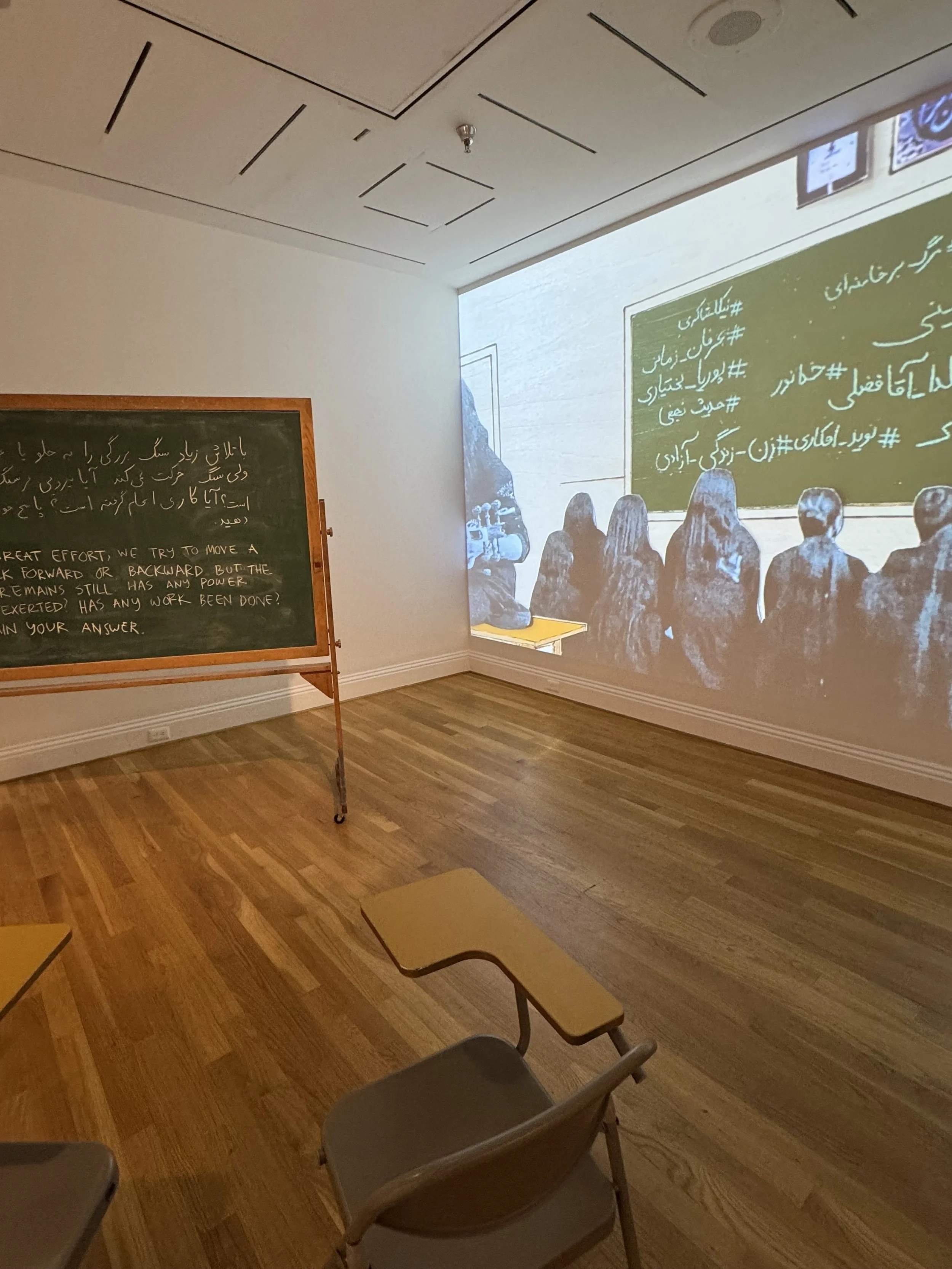
There were several installation artworks, one a room styled as a classroom in Iran. “Classroom Solidarities: Jin Jiyan Azadi,” which the Tehran-born, Kensington, Maryland and LA-based artist Mojdeh Rezaeipour created, uses a chalkboard, screen with images on it, and framed pictures attached to the walls to show images and videos created as protest art by women and girls in school classrooms. The images featured originally circulated on social media. Contemporary, topical and powerful.
Contemporary art is not just work created in recent times. It is artwork that resonates due to its feeling of simultaneity – being in the moment and embedded in current concerns. A floor below, well known artwork by artists including Picasso, Matisse, and Monet were on display. But upstairs, this exhibit seizes on the urgency of the artists’ engagement with their worlds. All 48 artists’ works are bold, provocative and thoughtful. Each foregrounds how closely connected artistic practice and aesthetic experience can be to the worlds where it is created and seen.
Tomorrow the Sun Will Rise showcases the ways that contemporary artists can transform how and what we see. It was hard to turn away.
Belle DeArmon is a teacher and writer based in Gaithersburg, Maryland.
