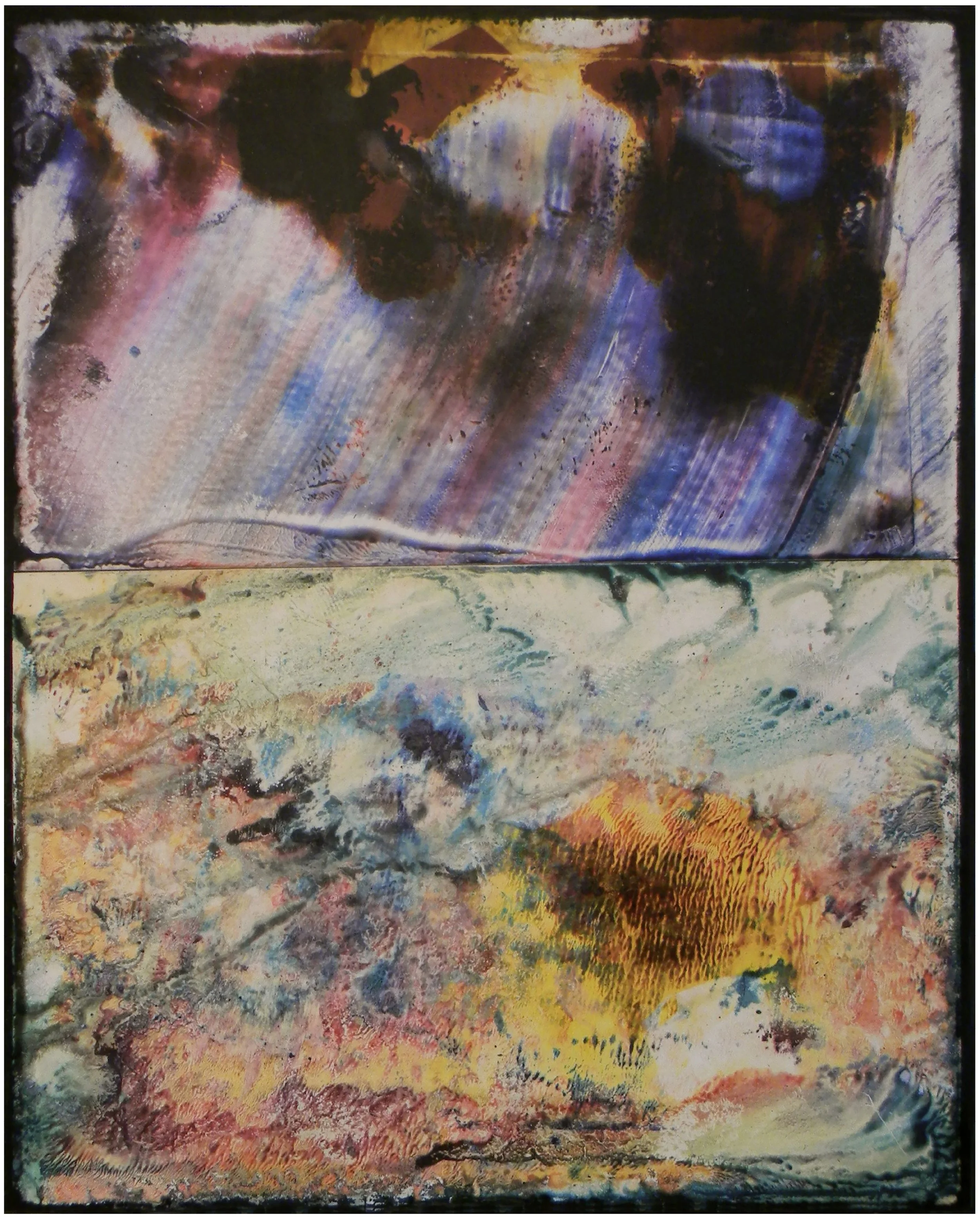
The Sisyphean Struggle of Don Kimes
Don Kimes at the Phillips Collection, Washington, D.C. interviewed by Jeanne Stanek
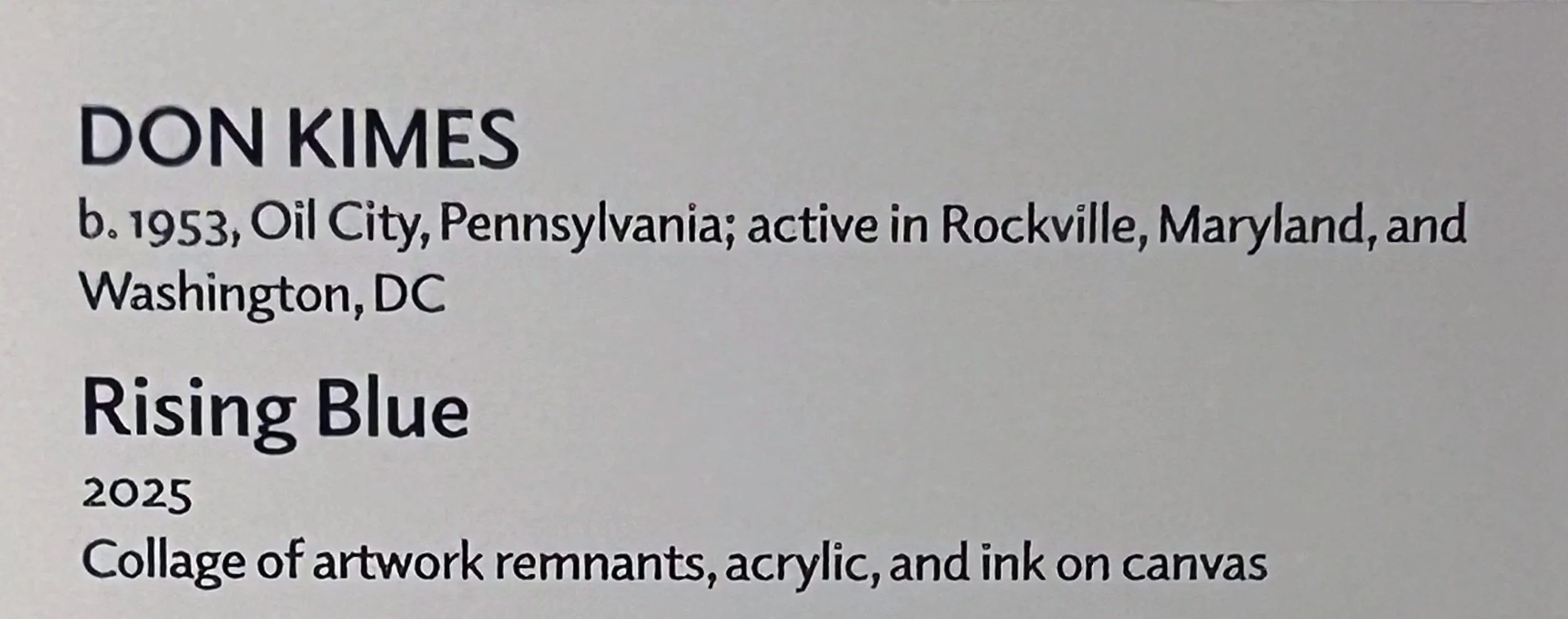
Don Kimes, recognized by the Phillips Collection in Washington, D.C. in their juried exhibition of the best living 48 DC area artists epitomizes the theme of the exhibition, The Sun Also Rises, as he describes his journey in an interview with writer Jeanne Stanek at the Phillips. He narrates the loss of his early work in a catastrophic flood to rise, phoenixlike to paint the superlative canvases he exhibits today.
To hear the audio of the interview, please click play button.
Don Kimes, now Professor of Studio Art at American University recalled his experience of the catastrophic flood that submerged all his works on paper, during his directorship of the Chautauqua Arts Residency in Chautauqua, New York. The work, stored along with photographs and documents from his private life, including correspondence with well-known artists including Alice Neel and Philip Guston; what Don called the record of his existence was destroyed. He called it “pulp”. Don’s ensuing depression lasted three and a half years after which he was invited to give a talk at Chautauqua for the arts public. As 4,000 people had been invited, he could not cancel it. There, a woman asked if “I had ever painted through pain”, and that, according to Don, was his epiphany. He would paint through the pain he had experienced.
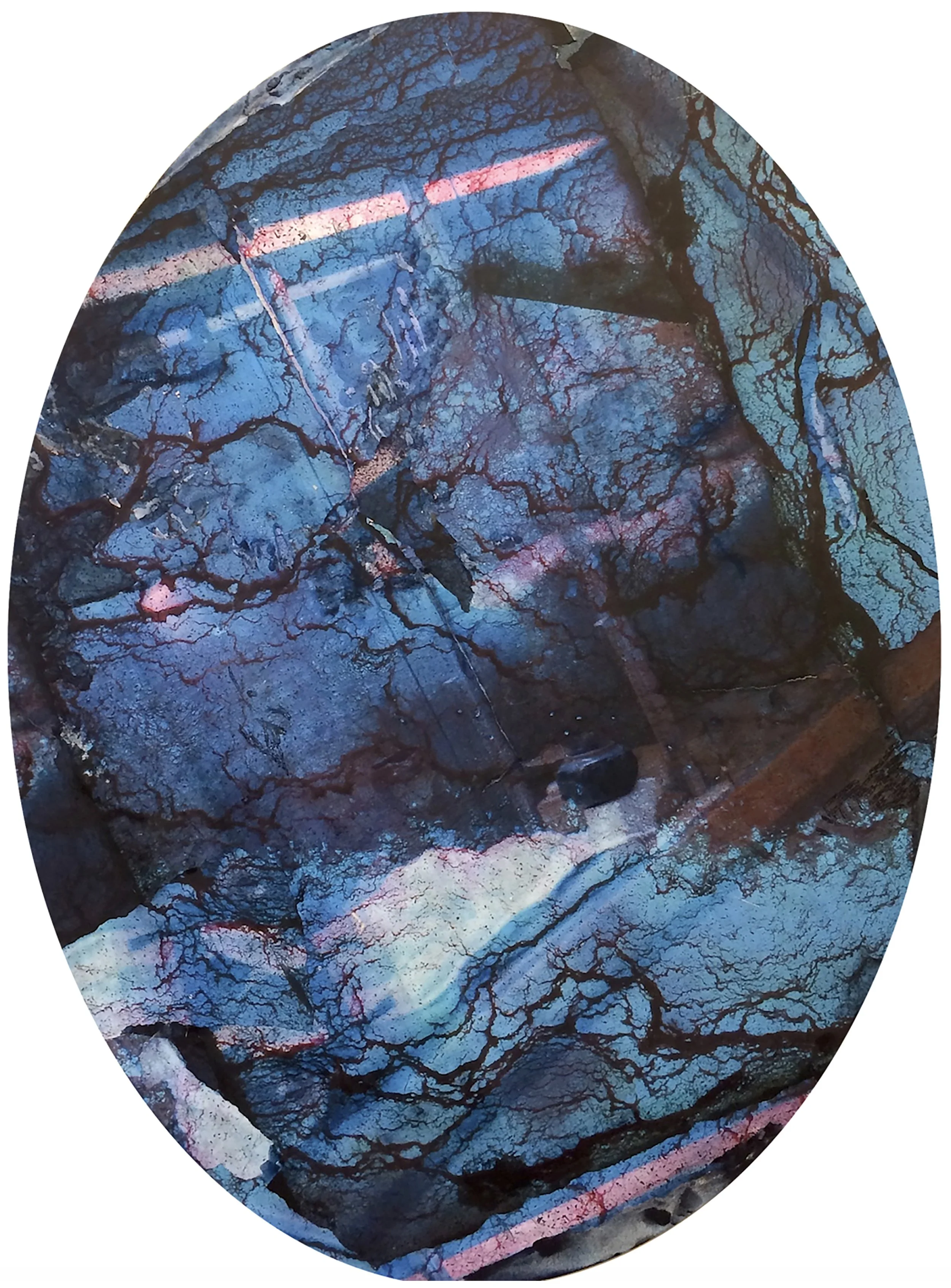
Interviewed by Stanek, Don talked about how he believed and talked for years about nature’s taking everything back. He related that in Italy, at the ACI residency in Italy that he directs, he sees layers in stone, a hillside looks like a groomed hillside that was wild at first and may again be wild, when the land takes the ordered garden back. In his case, nature took everything that he had created, envisioned, produced, back, inundating it with reams of water.
“But” he related, “the water gave me the impetus to paint rather than give up. Painting,” said Don”, “saved my life. I used the second part of my life to paint the first part. I would never have done this without the flood. The work held together by the worst thing that happened. Twenty-three years later, I still have so much information, so much to paint. Creativity means doing something you could not have thought of before that moment, but that reflects the world situation. I’m building a maquette for a larger world. I’m asking “How do we take suffering and build from it? The flood was a gift twenty-three years ago. I lost my paintings, but I didn’t live in Gaza or Ukraine. The flood gave me the impetus to paint rather than giving up. I struggled for years for my painting voice and could never have done this work here today without the flood.
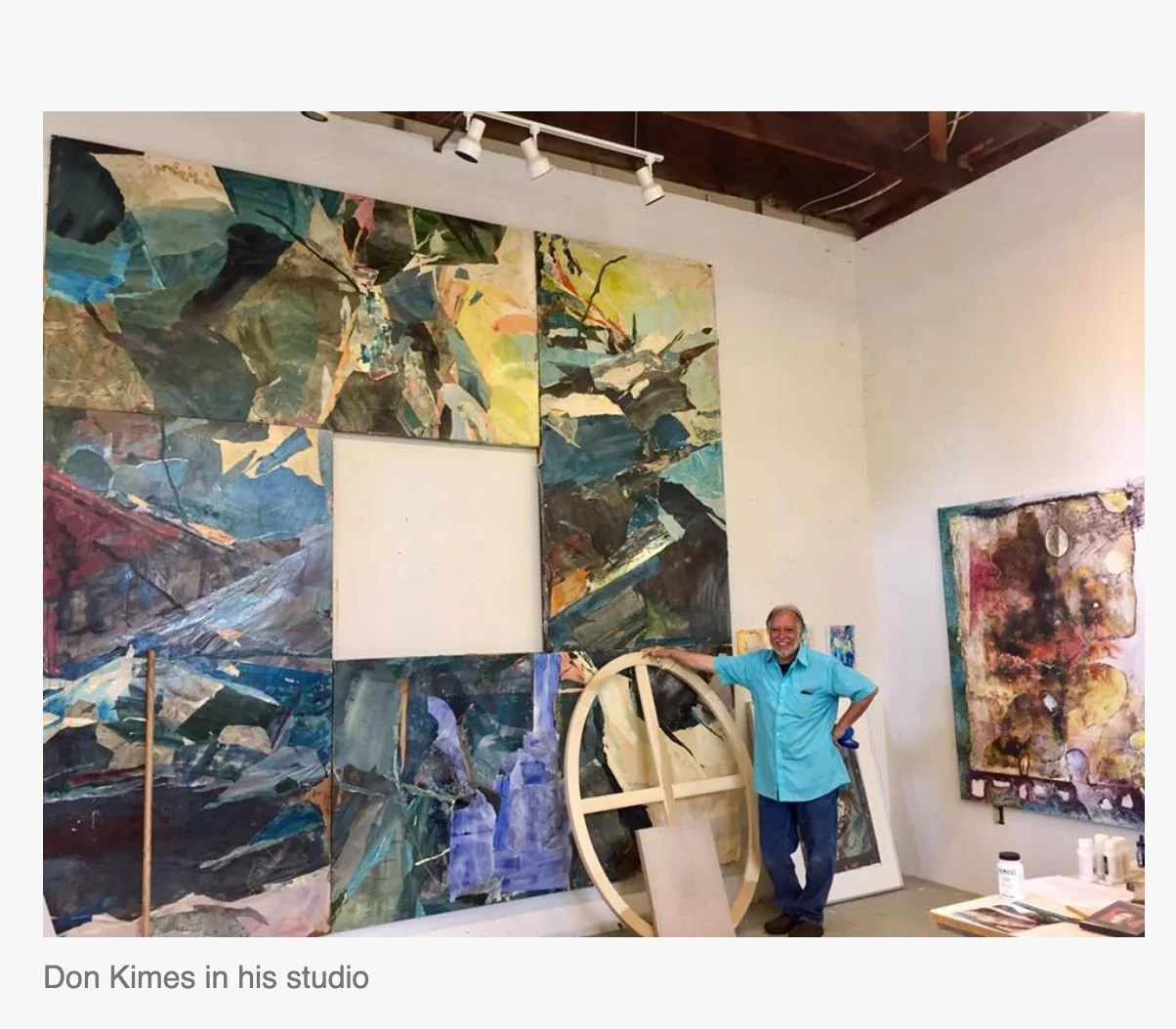
This work, so reflective of what’s happening in the world today, the ruination of the land, the floods worldwide, serves as a maquette for the suffering of the larger world; a metaphor for the state of the world today. The paintings at the Phillips reflect some of what the U.S. is facing today. Creativity happens in how you respond to an event.
I love Sam Gilliam (who died last year).
He told me, “You get to walk into your studio every day and reinvent the world”. I studied with one of the Ninth Street Women. I was taught how to push outside conscious awareness. I was incredibly lucky to have worked with some great people, including Barbara Rose, who taught me to get out of the box and do something you didn’t expect.
I interviewed at American University for grad school in studio art with Ben Summerfield at the old Watkins building at the edge of A.U.’s campus. It didn’t go well. Hit by a bread truck, I crashed my car on Mass Ave. on the way out after the interview. I took a crowbar I had in the car, and soaking wet in the rain, pried the fender away from the tire and said I’m never going back to that f…ing town again. Years later, in 1975, when I was program director at the New York Studio School, a job came up for Department chair in studio art at A.U. S, I came down to A.U. where I met Barbara Rose, the famous art critic and built the art program, not just the art department. Sy Katzen gave fifteen million dollars for the Katzen Art Center, and it was built directly across the street from where I wrecked my car in 1975 and swore I’d never return. I ran the ACI residency program for A.U. grad students in Italy, part of the MFA program. Still teaching at A.U., I have a long history as an educator and stay in touch with hundreds of students. You never know. You can’t predict the future or imagine the past.