
The Digital Muse: Artificial Intelligence and the New Humanities
By Lanita Brooks-Colbrt
MIT postdoctoral researcher Ziv Epstein, SM ’19, PhD’23, addresses issues arising from the use of generative artificial intelligence in art and other media. He wrote that the rapid advancement of artificial intelligence has generated significant debate, with some predicting an idyllic utopia and others warning of existential risks. However, speculation about the future trajectory of AI technology, while important, can overshadow critical discussions regarding the responsible management of current AI technologies. These developments raise fundamental questions about the creative process and the role of humans in creative production. How can the human aspect of creativity be preserved amid the proliferation of new technologies?
The arts can function as a tangible testament to the exclusion and oppression experienced by individuals across societies, fostering a deeper understanding of shared humanity. The integration of the arts with the humanities safeguards democratic values, promotes critical thinking, and encourages diverse perspectives that reflect collective experiences. When generative artificial intelligence is employed in conjunction with human intention and skill, the algorithmic work of art, being canvas, music or the written word, has the potential to democratize artistic creation and facilitate advanced forms of expression including diverse expression included in a common expression. This structure highlights how a shared identity or category holds diverse perspectives, cultures, or forms, such as “cultural diversity” spanning multiple tradition. How can technology facilitate the expression of creativity in fields such as art, music, and writing?
AI is the broad concept of machines simulating human intelligence to perform tasks, analyze data, and make predictions. Generative AI is a subset of AI focused on creating new content—such as text, images, code, or music—based on patterns learned from training data, rather than just analyzing existing data. Generative AI acts as a powerful collaborator in the arts by accelerating brainstorming, enabling rapid experiments, helping overcome creative blocks, and allowing creative professionals to focus on conceptual expression, but more notably, it expands the boundaries of artistic production. By acting as an instantaneous brainstorming partner, AI expands artistic boundaries, moving creators from manual execution, such painting or writing, to curation, enabling them to merge unrelated domains and explore uncharted stylistic territories. Generative AI enables creators to cross-pollinate, blending disparate styles and genres to produce hybrid art forms that are difficult to achieve through traditional means. While AI is a powerful tool, it functions best as a “thought partner” rather than a replacement, augmenting human creativity rather than replacing it.
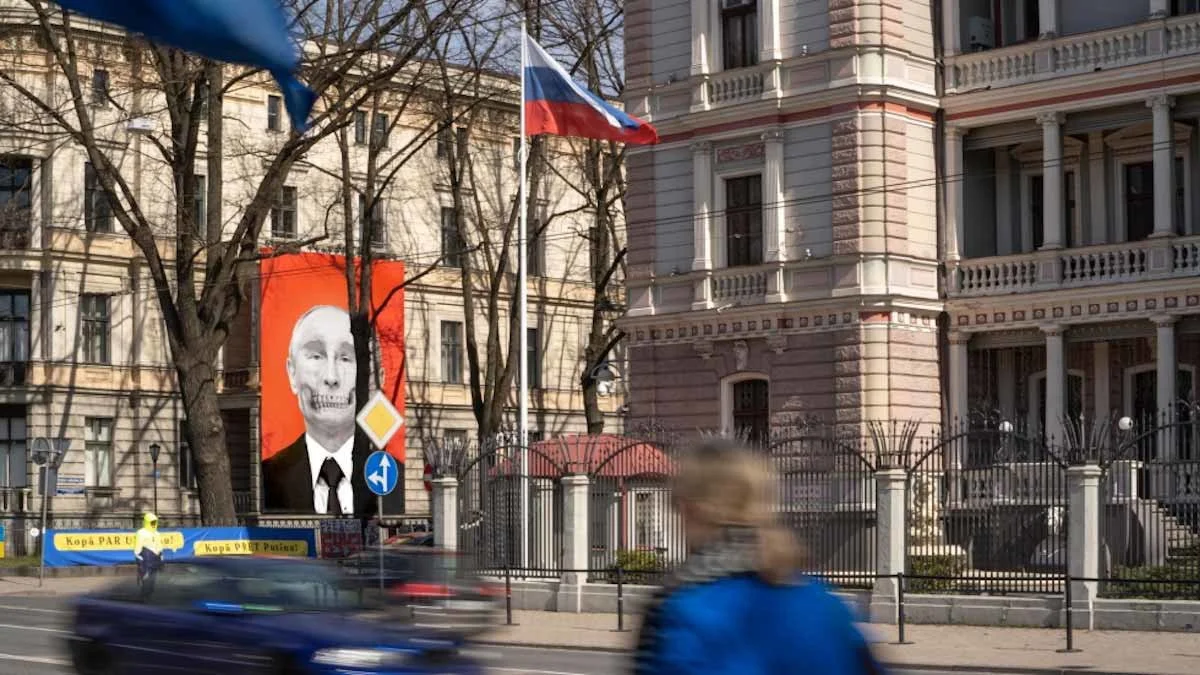
You Reap What You Sow by Kriss Salmanis on Display in Latvia, 2022. Source: Kriss Salmanis
AI is increasingly capable of non-verbal expression and interpretation, particularly through the analysis and simulation of human facial expressions, gestures, and vocal tones. Although AI cannot genuinely experience emotions, advanced systems can simulate non-verbal cues in virtual human forms and detect subtle human behaviors such as raised eyebrows or micro-expressions. Non-verbal communication of emotion involves conveying feelings through actions rather than words, often subconsciously, by using facial expressions, gestures, and body language to complement or modify spoken messages. This form of communication is powerful, immediate, and often more authentic than verbal expression. Both verbal and non-verbal communication are essential in contemporary society, expanding our understanding of human interaction. In my view, the answer to both questions is affirmative. Effective communication, particularly when fostering connections, is fundamental. Does artificial intelligence capture the human aspect of creativity?
Artificial intelligence is comprised of complex algorithms designed to mimic the human mind. AI art is any artwork created using artificial intelligence algorithms. It’s one of computer science’s early applications in the creative realm. Allowing the Algorithmic creative work( mixed media using digital imagery, sounds, or ChatGPT) to embody the creative approach as a tool can simulate and stimulate emotion, struggle, and beauty with precision, but it will lack the essential quality that makes the arts what they are: the human experience displaying, portraying or conveying the emotions of the creator.
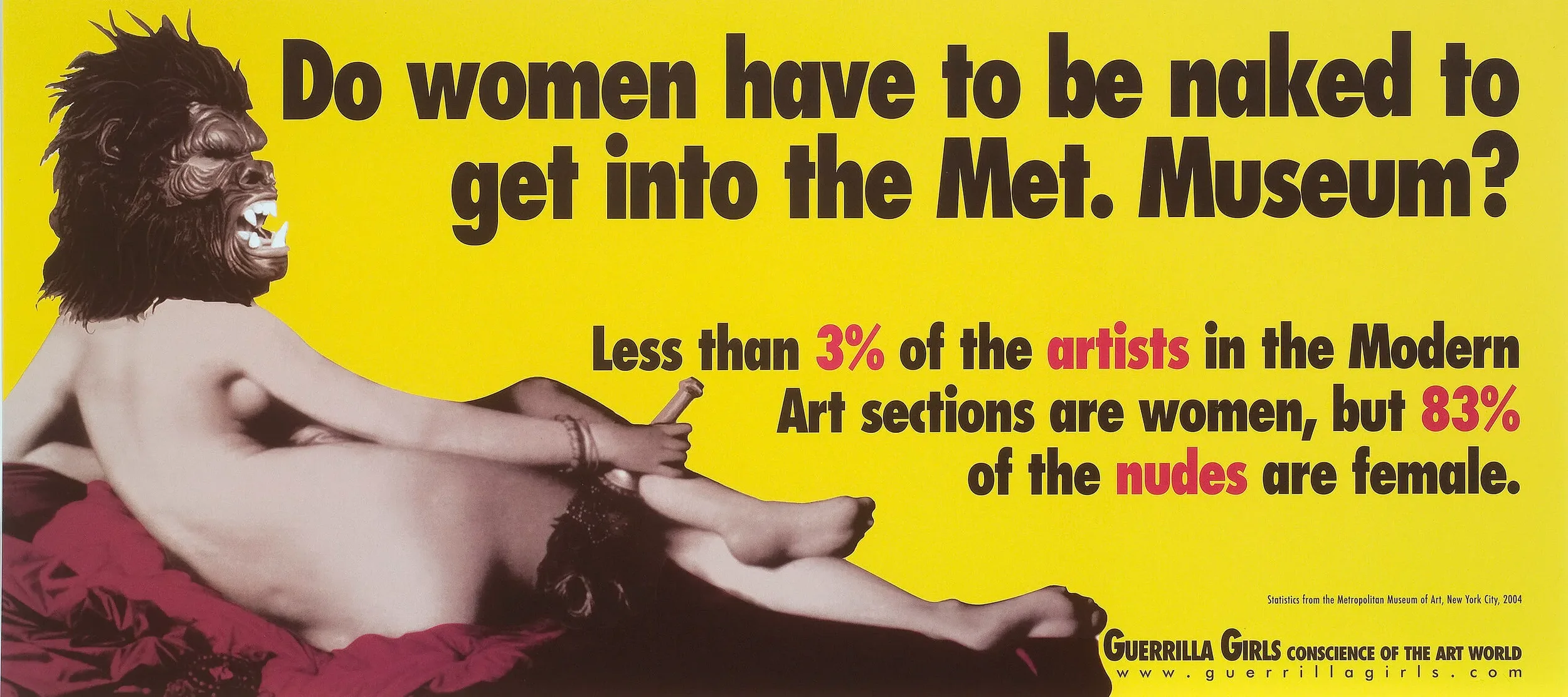
The Guerrilla Girls, 1989.
The arts, including literary arts, focus on creating works and performances, while the humanities emphasize research and critical analysis. Art and humanities both interpret the human experience through words or non-verbal forms of expression. Art documents history by providing a platform for personal expression. The exploration of tools beyond conventional instruments and mechanisms has broadened the boundaries of creativity.
In 2001, David Hockney’s book, “Secret Knowledge: Rediscovering the Lost Techniques of the Old Masters,” highlighted that artists have historically utilized devices such as the camera lucida to assist in their work. Although some creatives perceived this revelation as diminishing artistic credibility, technological tools have consistently been integral to art history. Examining the relationship between aesthetics, culture, and past art technologies can inform contemporary perspectives on artificial intelligence. The invention of photography, for example, initially provoked fears regarding the end of art, which ultimately proved unfounded. Photography established itself as a distinct medium and eventually liberated painting from the constraints of realism, giving rise to Impressionism and the modern art movement.
During the early 2000s, you might remember Hollywood’s obsession with artificial intelligence. Today’s AI applications are a far cry from the vengeful robots of AI, Robot or the awkward AI-generated child from Spielberg’s AI. Now creatives have found the next big thing in AI: the AI art generator.
Notable creators include Sougwen Chung, former researcher at MIT Media Lab and current Artist in Resident at Bell Labs and New Museum of Contemporary Art in New York, who paints alongside robots. Mario Klingemann combines the analytic mind of a coder, the creative fervor of an artist, and a dash of mad scientist, and the algorithm work amplify AI generation with digital manipulation. Linda Dounia, designer and graphic artist, creates works that delves into how AI can either perpetuate inequality or stimulate reflection on the profound philosophical dimensions of techno-capitalism. This is achieved by combining GAN-generated elements with traditional painting materials like ink and pastel. All these creatives use AI as a collaborator—a “thinking brush”—rather than a replacement, allowing them to explore new forms that would be impossible with traditional tools alone. They embrace artificial intelligence as their creative partner.
Although it is not the role of viewers, readers, or critics to determine these boundaries placed by the creatives, the potential of artificial intelligence to revolutionize the arts and influence those who seek to integrate art into the human experience is undeniable. Some would argue that AI art generators undermine the essence of creativity and human expression. However, proponents of AI-generated art maintain that these technologies can complement and enhance human creativity, rather than replace it, while expanding the boundaries of what is traditionally considered the arts and redefining the concept of the creative professional. It is therefore pertinent to consider whether AI and generative artificial intelligence constitute a medium with its own unique affordances. While the nature of the arts will continue to evolve, a central question remains: how will creative professionals express their intent and style through this new medium of artificial intelligence? Far more important is the significance of lack of control over output and associated ethical concerns.
