
Gold and the Arriviste Presidency
By Jorge Miguel Benítez
When Louis XIV built his monarchical compound near the village of Versailles, there was a global consensus that power and beauty were inseparable. From Tokugawa Japan to Mughal India and the royal courts of Europe, beauty was an instrument of statecraft. Refinement and brutality went hand in hand without any sense of contradiction. Gold enhanced beauty in the projection of power. Its aesthetic worth followed its symbolic status as an incorruptible metal that shone like the sun. Furthermore, its scarcity and the labor involved in its extraction and refinement added to its value as a precious metal. Aside from those qualities and its use as currency, the metal was mostly decorative until the arrival of the Scientific and Industrial Revolutions transformed it from a precious metal into a strategic commodity essential to modern technology. Yet for all of its newfound usefulness, gold is still perceived as an almost divine substance worthy of princes, kings, emperors, dictators, and oligarchs. Where should it fit within a republic aspiring to monarchy?
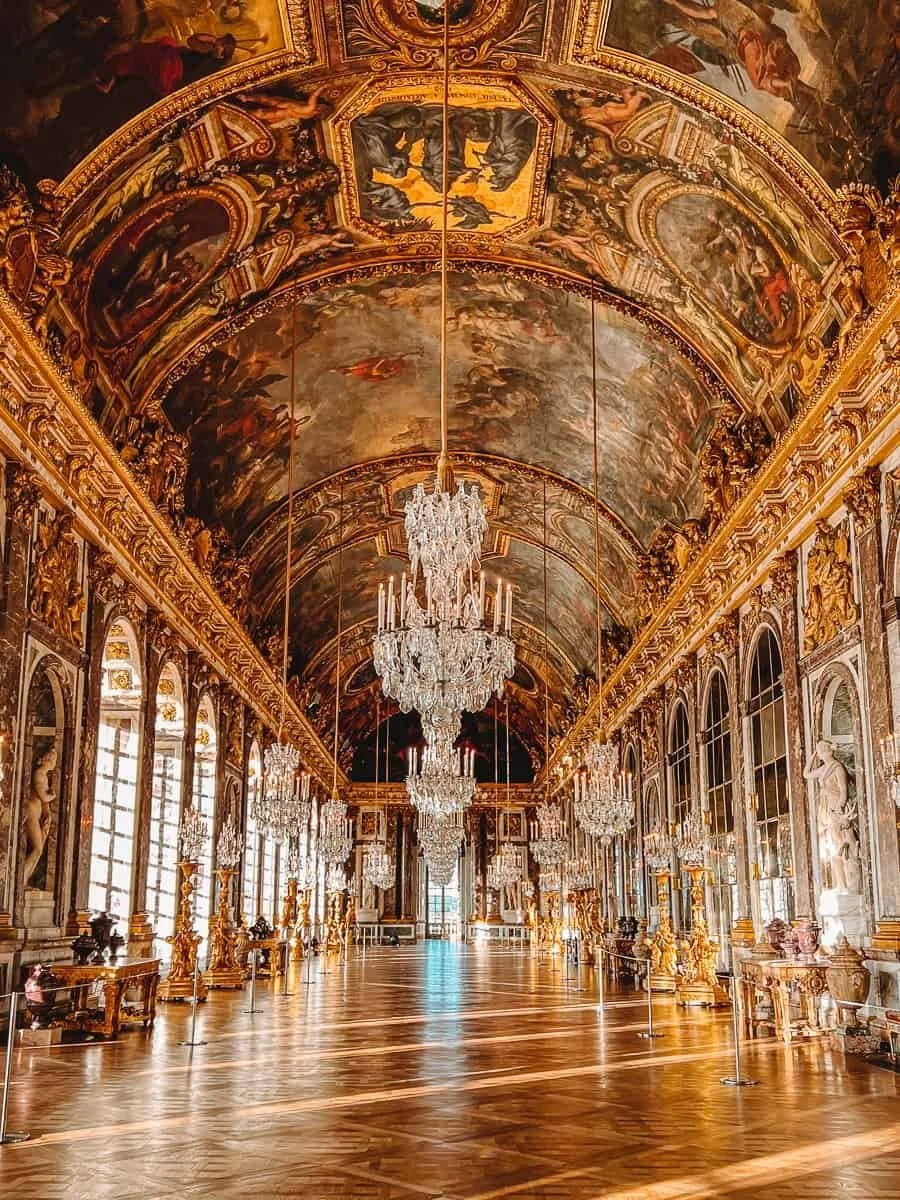
Versailles Palace Hall of Mirrors
As the French Revolution followed the American Revolution in what threatened to become a tidal wave of republicanism, gold underwent a change of identity from something close to God to an expression of collective virtue incarnate in a free state. From 1789 to 1918, monarchies came and went while republican governments grew in number and variety. From 1917 to 1991, authoritarian and totalitarian republics, ranging from the Soviet Union to the short-lived Third Reich, seemed ascendant around the world. Then, in 1989, the Communist Eastern Bloc began a collapse that ended with the disintegration of the Soviet Union in 1991. Liberal Democracy appeared unstoppable; but history had other ideas, and gold once again returned to its former image as a projector of personal wealth and power as apparatchiks self-transmuted from Communists into hyper-capitalist oligarchs. Meanwhile, the United States would witness the rise of the tech billionaires, a nouveau-riche class that would eventually empower a fellow citizen for whom gold served as a symbol of his self-proclaimed brilliance as a potential American version of Louis XIV.
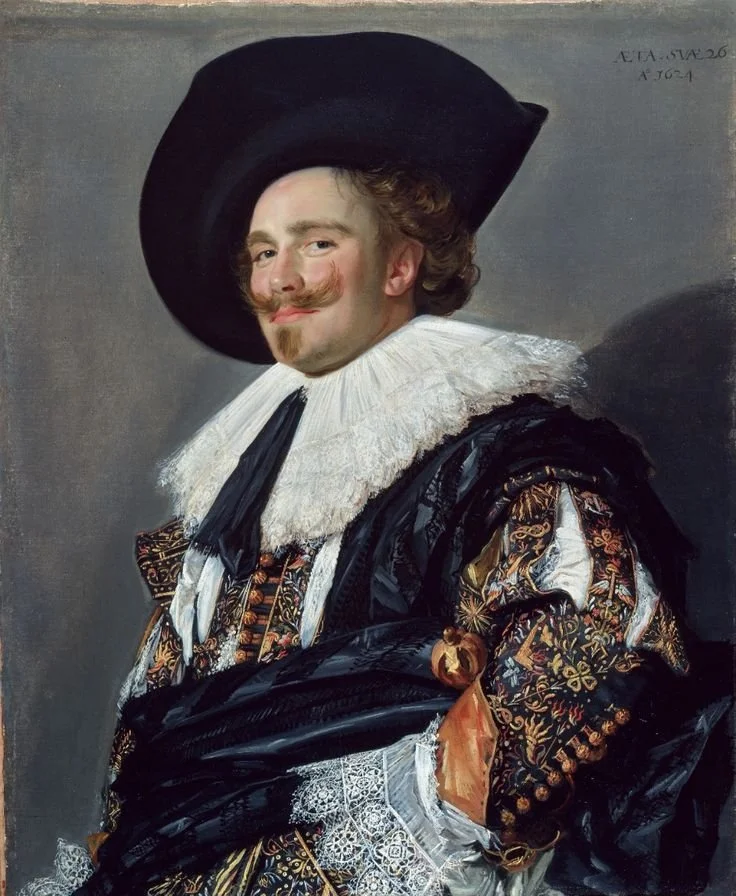
Fran Hals, The Laughing Cavalier
Unlike the White House, Versailles was not saddled with constitutional baggage. It made no pretense of equality. Instead, it illuminated France with the golden glow of the absolute monarchy of the Sun King. As God was the king of Heaven and Earth, Louis XIV was the king of France by divine right. He was not a representative of the people. He was a representative of God who, like gold, was uncorruptible. By contrast, the current American regime has divine aspirations but lacks a pedigree. It lacks the patina of traditional aristocracy, that mystery that the passage of time conveys by obscuring the initial thuggery of the ancestral line. Therein lies the allure of hereditary monarchy. Conversely, republics can only avoid vulgarity by remaining austere, like the burghers of seventeenth-century Holland who supported art that celebrated the joys and virtues of their bourgeois lives without relying on gilded ostentation. The Dutch Republic avoided golden displays and instead gave us Rembrandt, Vermeer, and Hals. This does not suggest the absence of gold from Dutch life. The merchant class, the backbone of the Netherlands, was often wealthier than the most powerful European kings. It did not need to flaunt a golden image to prove its worth. As for Rembrandt, the great master depicted gold in his religious paintings and even portraits with almost cautionary discretion. Indeed, the bourgeoisie can exhibit exquisite taste when it appreciates the value of its role within an imposed social hierarchy. It only falls into crassness when it aspires to monarchy as did the leading twentieth-century autocrats and their current American political descendant.
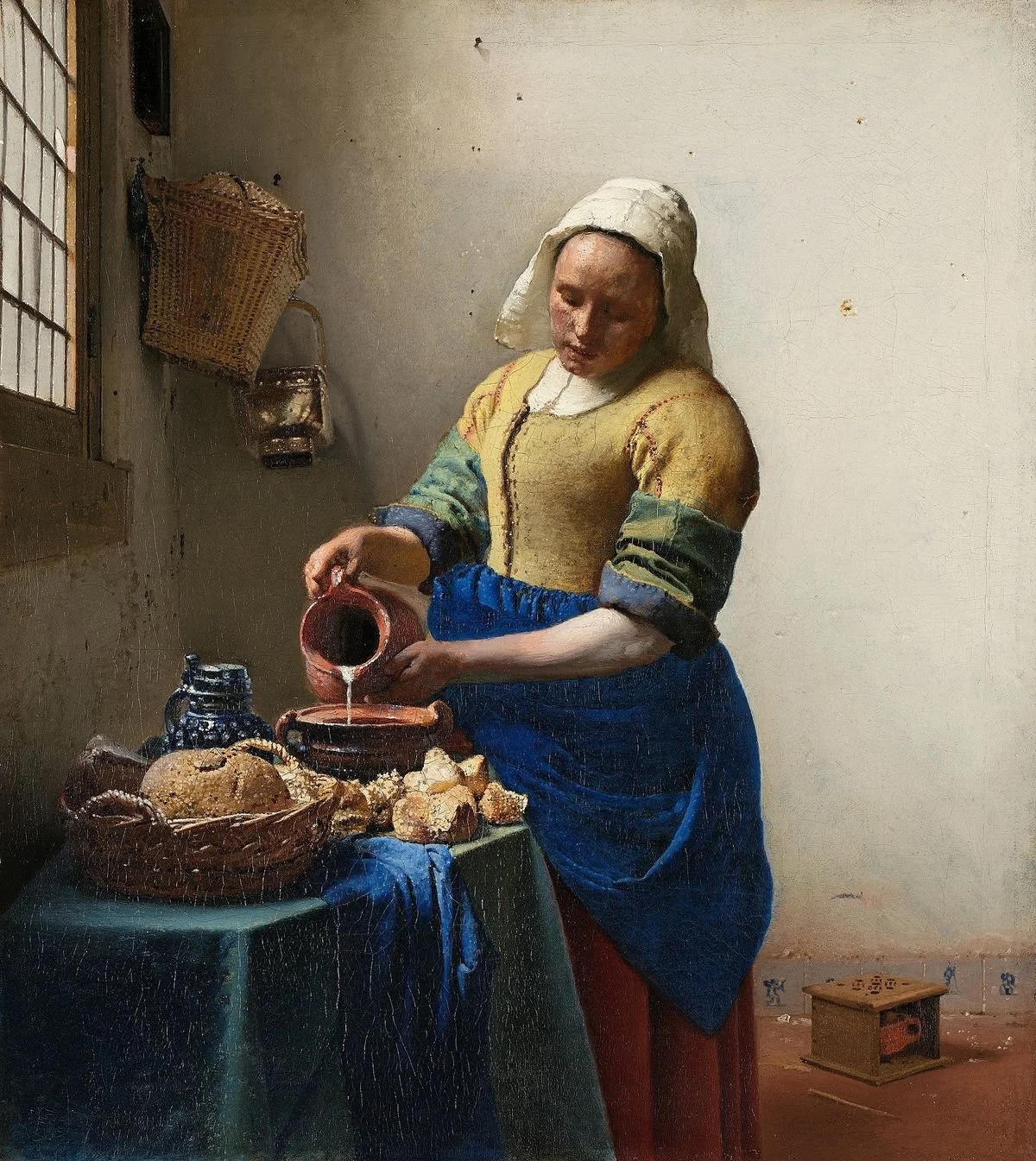
Johannes Vermeer, The Milkmaid
Yet even if the president were an aristocrat by blood, he would still have to fulfill his duties as a servant of the people in accordance with the heretofore inviolable Constitution. The United States Supreme Court effectively rendered constitutional restrictions on executive power meaningless in 2024 when it ruled that the president was immune from prosecution for “official acts.” The ruling paved the way for a monarchical presidency free from the Constitution, the law, and the people. The repercussions would soon be felt in every sphere of American life including the remaking of the White House from a treasure belonging to the American people into the private domain of a would-be king.
From its first days, the White House was understood to reflect the republican values of the new nation. As such, the president’s home would be modestly elegant, sober in its appointments, and human in its proportions. The dwelling would invite and welcome rather than impress or impose. Andrew Jackson, arguably the first populist American president, demonstrated the new values when he opened its doors during his 1829 inaugural reception to thousands of ordinary citizens who, like teenagers at a keg party, made themselves a little too at home. Under such democratic circumstances, Gold would be used as an accent that addressed collective greatness rather than personal grandeur. It would symbolize stability, security, and liberty. As the First Citizen, the president would act as the First Servant, an individual whose most important duty would be to uphold the laws of the Republic for the benefit of its citizens while acting as the chief steward of what they held in common. Those quasi-sacred principles were dismissed on January 20, 2025, in a speech that declared the monarchical ambitions of a president longing to become a divine-right emperor.
Yet even as he proclaimed the reinvigoration of Manifest Destiny through the conquest of Canada and Greenland while making money from crypto currency and accepting emoluments in violation of unenforceable laws, the president revealed that fraud could be symbolic as well as real. The gilding of wood, stone, or plaster is as old as the use of gold itself. Gilding saves weight and money. Furthermore, pure gold is too soft to be cast into objects used in everyday environments. Still, the gold leaf used in gilding is made of real gold. By contrast, the White House, beginning with the Oval Office, is reputed to be filled with cheap, off-the-shelf decorations spray painted to look like gold. As if to parody his own lack of taste, the man who loves gold chose a mockery of gold over the real thing and unselfconsciously entered a realm that betrayed the true nature of the arriviste.
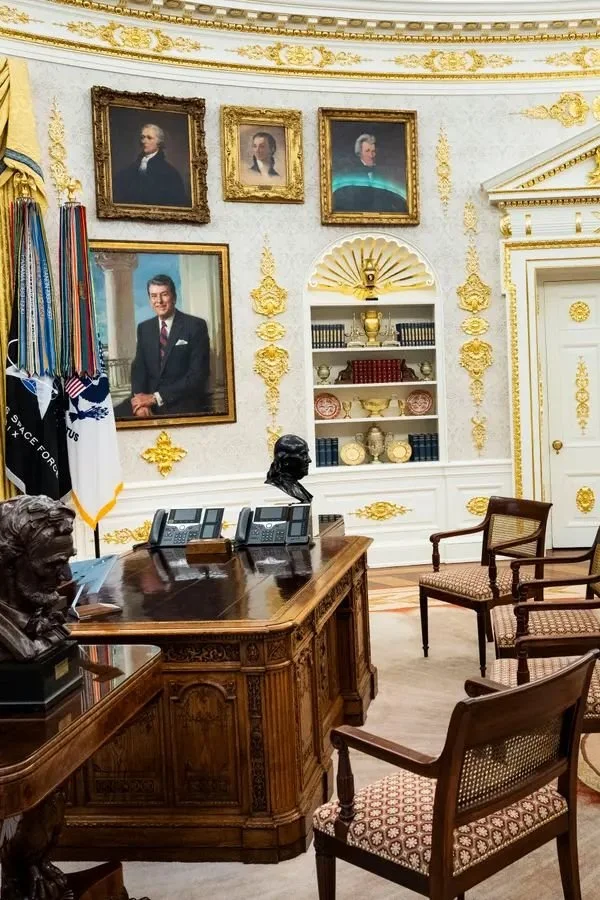
Current White House Oval Office
Gold can purchase status, culture, power, and even the trappings of respectability; but no amount of golf courses, private jets, or braggadocio can surmount the gutter. Such is the understanding that elevates a poor country singer from the hills of Tennessee to the status of an aristocrat, while a former English prince can fall below an American president with whom he allegedly shares a sordid past. True aristocracy does not emerge from blood or gold but from a cleareyed acceptance of the world in its tragic fullness. In that sense, the low-born Abraham Lincoln may be the most aristocratic American president. The powerful are often the true slaves, victims of their own pettiness and lack of perspective. By contrast, the genuine artistry of a country singer or a president who writes his own speeches while trying to preserve a nation, can be inherently aristocratic due to its profound humanity.
Ultimately, power devoid of humanity must compensate for its insurmountable mediocrity with avarice, brutality, and destruction. Such power demands respect because it is incapable of earning it. It can neither encourage nor inspire. It can only dominate, threaten, oppress, and punish. It conquers without seduction while worshipping a Golden Calf of Emptiness cast from a metal that cannot tarnish but corrodes all that it touches.
