
Art • Innovation • The Built World
Why Creative Collaboration Should Begin Before the First Brick Is Laid
By John Jones

Khalid Thompson, Golden Gene Pool, 2019, Acrylic and mixed media on Canvas
Eyitayo Alagbe, Born King, 2022, Charcoal and Acrylic on Canvas.
Ram Brisueno, In the Painted Gardens, 2021, Acrylic and found paper.
The real estate industry is entering a period where expectations extend well beyond the delivery of space alone. Communities increasingly seek places that inspire, connect, and evolve with the people who use them. To meet that standard, developers should consider bringing creative partners into the earliest stages of a project. When artists, cultural thinkers, and innovators contribute from day one, the result becomes far more than a physical structure — it becomes a destination with character and purpose.
Historically, development and the arts have moved on parallel paths. Both have shaped the way cities feel and function, but rarely at the same moment in a project’s life. That is beginning to change. A new mindset recognizes that creativity and technical innovation have the greatest impact when they are embedded into the foundation of a project, not added once the major decisions have already been made. Developers build the framework of a place. Creative contributors bring that framework to life with ambience, texture, and imagination.
Engaging artistic voices early produces layers of meaning that cannot emerge from spreadsheets or design renderings alone. These partners help reflect the past, present, and future aspirations of the surrounding community, grounding the project in something that resonates with the people who will eventually gather and work there.
This shift was clear at Art Basel Miami Beach 2025. What began years ago as a fair focused on art sales has evolved into a broad, cross-sector forum where artists, creatives, and leaders from real estate, technology, design, education, and philanthropy now exchange ideas about how culture and the built world can evolve. The presence of creators collaborating alongside industry leaders has transformed the week into a living laboratory for new thinking, where imagination and development strategy can stand side by side.
Going forward, the development initiatives that will stand out are those that deliver impactful experiences, integrate innovation, and create environments that resonate with the people who inhabit them.
The Economic and Human Contributions of Art
Cultural investment is increasingly viewed as an economic strategy, not just an aesthetic one. Contemporary art has delivered notable performance over the past decade, with estimated annual returns around 14% and a growing share of global auction sales — rising from roughly 3% in 2000 to about 16% today — demonstrating its growing financial and cultural impact.
Beyond direct sales, the creative economy fuels tourism, hospitality, architecture, entertainment, and local small-business growth. Neighborhoods that incorporate cultural activity often see stronger tenant interest, more consistent foot traffic, and a heightened sense of energy that benefits surrounding commerce.
Art shapes people on a personal level, with research indicating that creative environments improve focus, inspire creativity, and support well-being. Workplaces with artistic elements often report higher satisfaction and stronger curiosity, qualities that support long-term performance.
These benefits are observable, not theoretical. Developments that incorporate cultural elements early in the planning process often see quicker lease-up, stronger tenant loyalty, and more resilient long-term value. The most successful developments are those shaped through collaboration, bringing together architects, artists, engineers, technologists, local historians and educators, and members of the surrounding community.
Innovation as the Operational Backbone
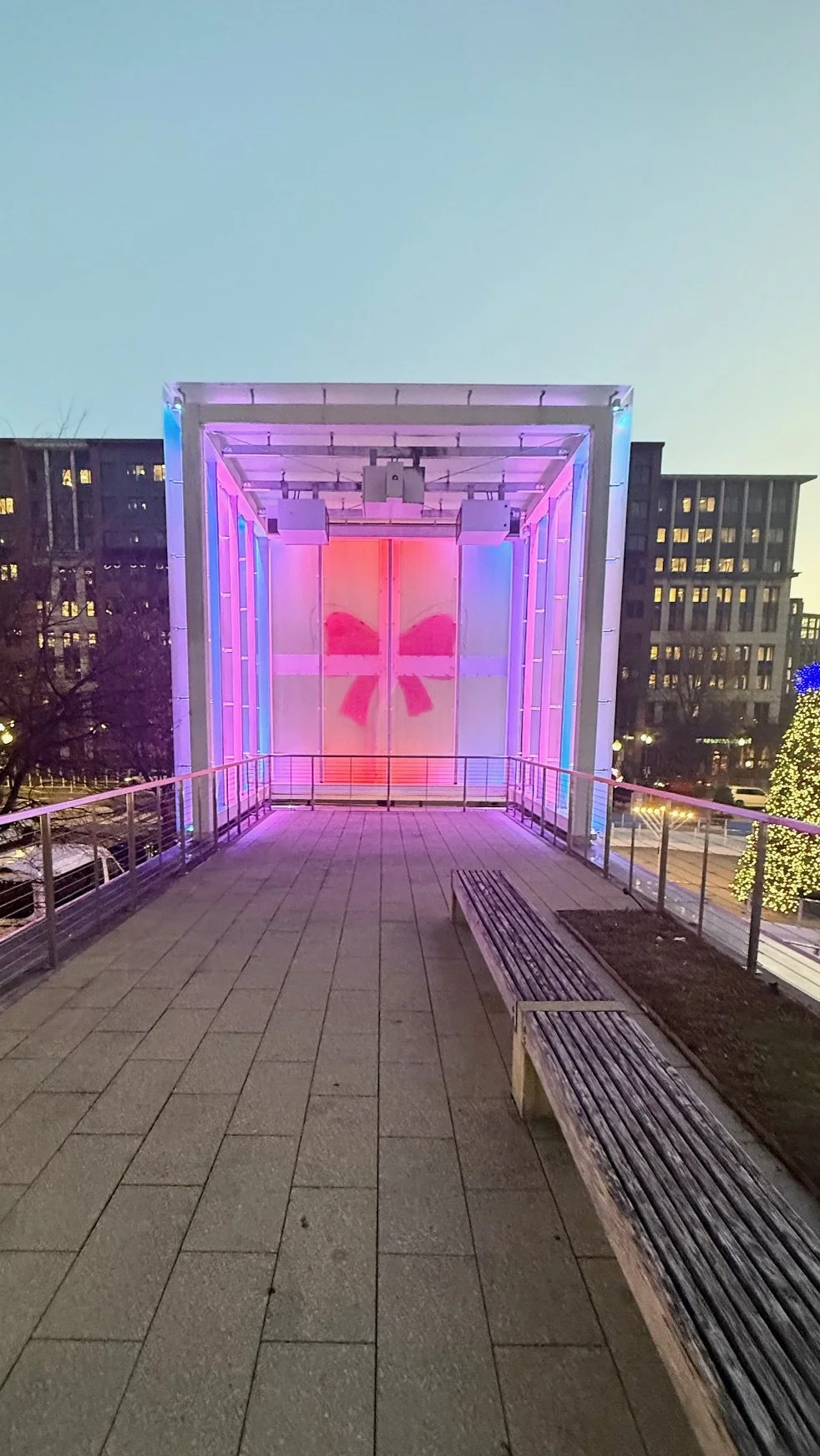
John Jones, Light Box art structure at Yards Park, Washington Navy Yard, DC.
If art shapes how a place feels, innovation shapes how it performs. Advances in materials science, construction technology, robotics, and artificial intelligence are reshaping how real estate is designed, built, and experienced.
Robotics and modular construction are streamlining operations, saving time, and making construction more efficient. AI-driven tools strengthen site analysis, energy projections, and safety preparedness.
Smart and adaptive materials allow buildings to adjust to environmental conditions in real time.
Innovation improves how a built structure functions and lasts over time, while also creating a more meaningful experience for those who use it. Creative elements work in harmony with technology: a well-designed mural can aid navigation, a sculptural installation can serve as a neighborhood anchor, and a plaza can become an inviting civic stage.
Technology ensures the place works.
Creativity ensures the place matters.
Micro-Communities and the Future of Urban Development
These concepts align with the Real Estate 2030 Plan, which is focused on enabling the development of profitable, innovative micro-communities within urban cores. These districts would be intentionally designed at a human scale and built around walkability, convenience, and meaningful interaction.
Micro-communities thrive because they feel approachable and rooted in local character. When developers engage artists, creatives, small businesses, and community organizations early, these districts develop a cohesive sense of place and a sustainable economic engine. Innovation then supplies the infrastructure, including energy systems, digital access, and building safety that supports durable growth.
This leads to communities becoming places where people want to live, collaborate, and support local economies.
What People Expect From Today’s Built Spaces
Across market sectors, consistent trends and patterns are emerging. We are increasingly seeking experiences. We want spaces that feel thoughtfully shaped. We want neighborhoods that make connection natural. We are designing environments that support creativity as much as productivity. And increasingly, seeing lobbies that can double as cultural spaces and galleries, places where art shapes the vibe before conversations begin.
These choices strengthen our attachment to the places in which we live. They reinforce community life and contribute to sustained value for both users and investors. Healthy environments support strong communities. Strong communities sustain great places. Great places elevate the developments within them.
Cities evolve like living systems. Vision and imagination now matter as much as design. Real estate provides the structure. Art brings a sense of vitality. Innovation carries it forward.
John H. Jones is a real estate executive and thought leader focused on reimagining how communities are planned, built, and experienced. Known for blending insights from technology, the arts, and regulatory and civic frameworks, he champions a development philosophy that brings creators, innovators, and industry leaders together at the earliest stages of design. His work centers on the belief that the built world succeeds when it reflects the people it serves and evolves with the world around it.
